Understanding TDS (Total Dissolved Solids) in Drinking Water
Total Dissolved Solids (TDS) measures the combined content of all inorganic and organic substances contained in liquid. While water needs essential minerals like calcium and magnesium, excessively high TDS carries harmful heavy metals like lead, arsenic, and nitrates.
What Is the Ideal Drinking Water TDS?
- Below 50 ppm: Over-purified, lacks essential minerals, flat or acidic taste.
- 80 to 150 ppm (Optimal Range): Excellent, rich in healthy minerals with sweet taste.
- 150 to 300 ppm: Good and safe for daily consumption.
- Above 500 ppm: Unpalatable and hard; requires RO purification.
Filter Replacement Schedule
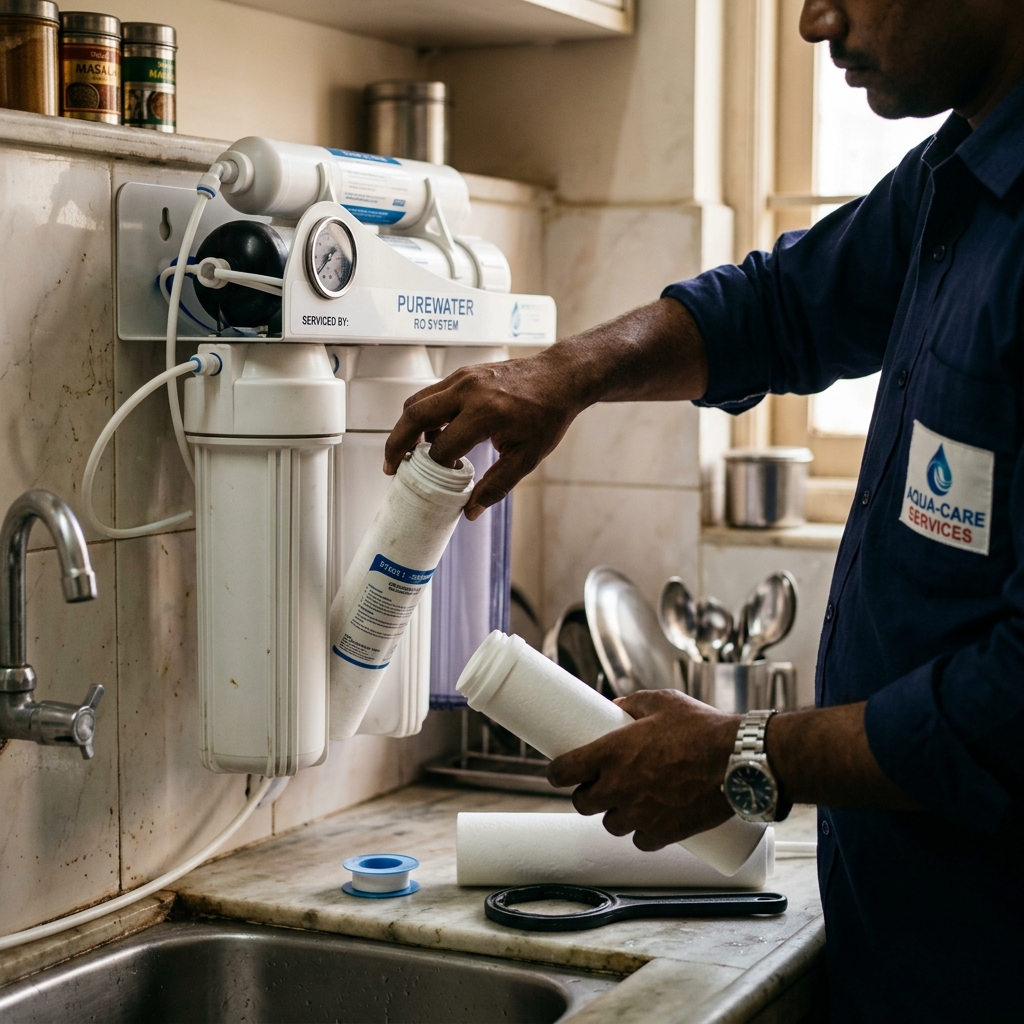
To keep your RO water purifier delivering healthy water, adhere to this standard service schedule:
- Pre-Sediment Spun Filter: Replace every 3 to 6 months depending on tap water mud content.
- Activated Carbon Filter: Replace every 6 to 12 months to remove chlorine, foul odor, and pesticides.
- RO Membrane (Reverse Osmosis): Replace every 18 to 24 months or when output TDS exceeds 200 ppm.
- Post-Carbon / Mineralizer Cartridge: Replace annually to balance pH and replenish copper/zinc.
Taste Check: If purified water tastes sour or has a plastic smell, the post-carbon polishing filter is saturated and leaking trapped contaminants.
Book Genuine RO Water Purifier Servicing
Tru-FIX-IT provides certified TDS testing, membrane descaling, and 100% genuine filter replacement for Kent, Aquaguard, Pureit, Livpure, and Blue Star purifiers. Call 9464881952 to schedule a visit.